
Modul handbook IS 2021
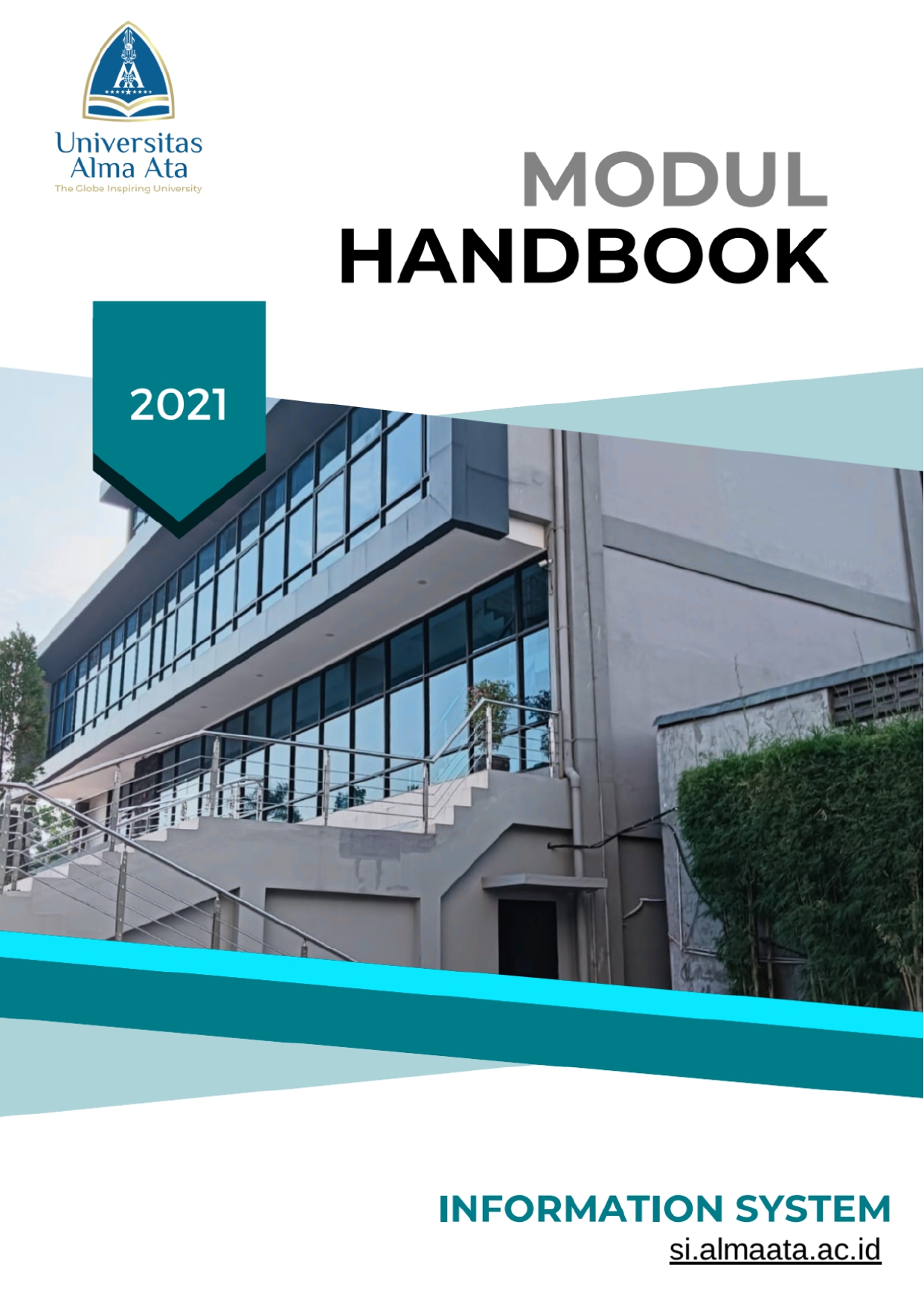
The 2021 Information Systems Study Program Handbook provides an overview of the curriculum structure and the list of courses that students must complete from the first to the final semester. It outlines the distribution of courses per semester, credit units, learning outcomes, and brief descriptions of course content that support competency development in the field of information systems.
This handbook serves as an academic reference for the implementation of the learning process. It helps students understand their study pathway and expected graduate competencies, while also guiding lecturers and program administrators in delivering structured and curriculum-aligned education.
Modul handbook IS 2026
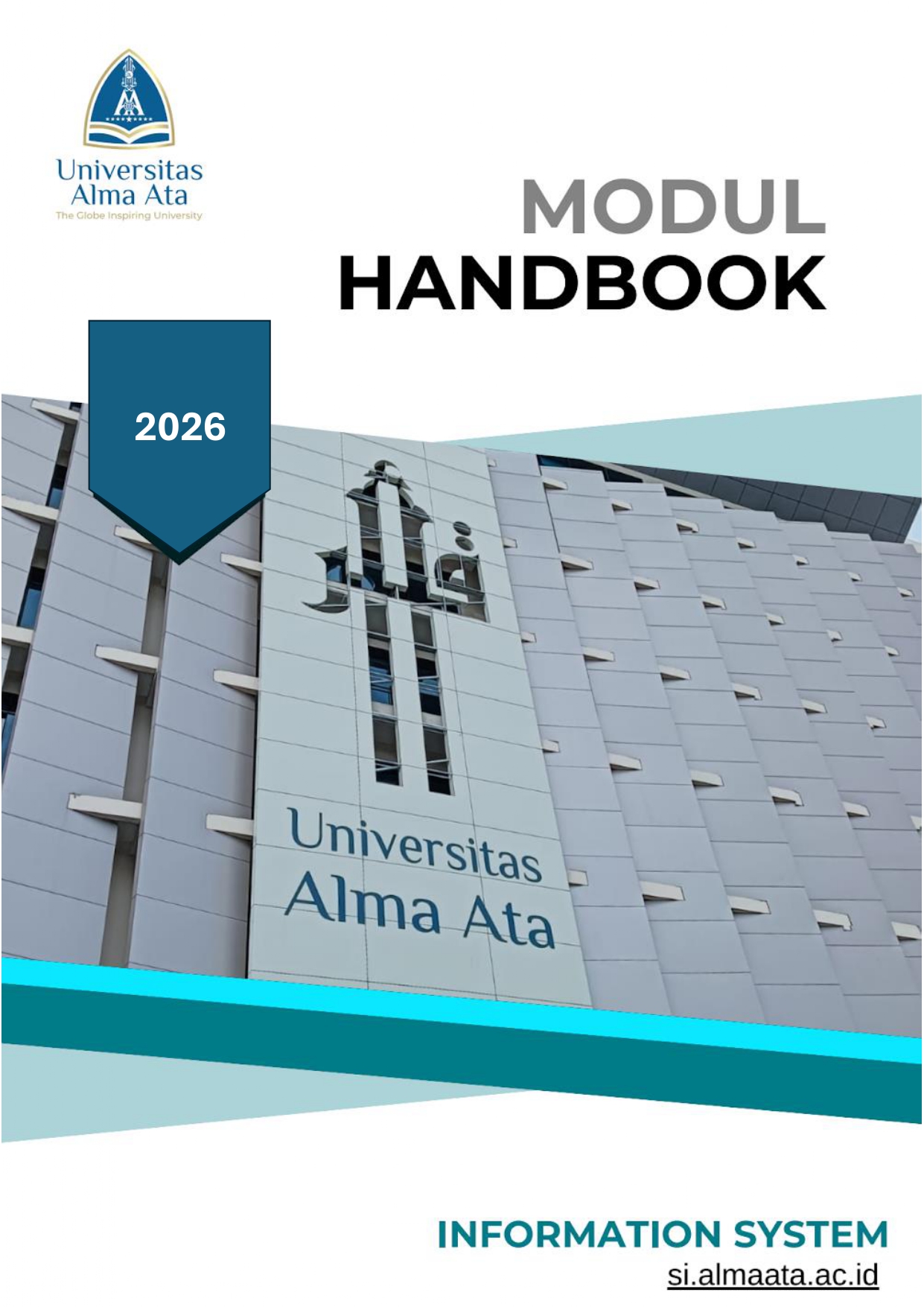
The 2026 Information Systems Study Program Handbook presents a comprehensive and structured curriculum that reflects current developments in information systems and digital technology. It details course distribution across semesters, learning outcomes, credit units, teaching methods, and assessments, with a stronger emphasis on digital transformation, data analysis, business integration, cloud computing, security, and technopreneurship.
This handbook functions as an academic and curricular guideline to ensure learning outcomes align with industry needs and professional competencies. It supports students in planning their academic journey and skill development, while assisting lecturers and program administrators in delivering consistent, outcome-oriented, and future-ready education.
Student Special Needs
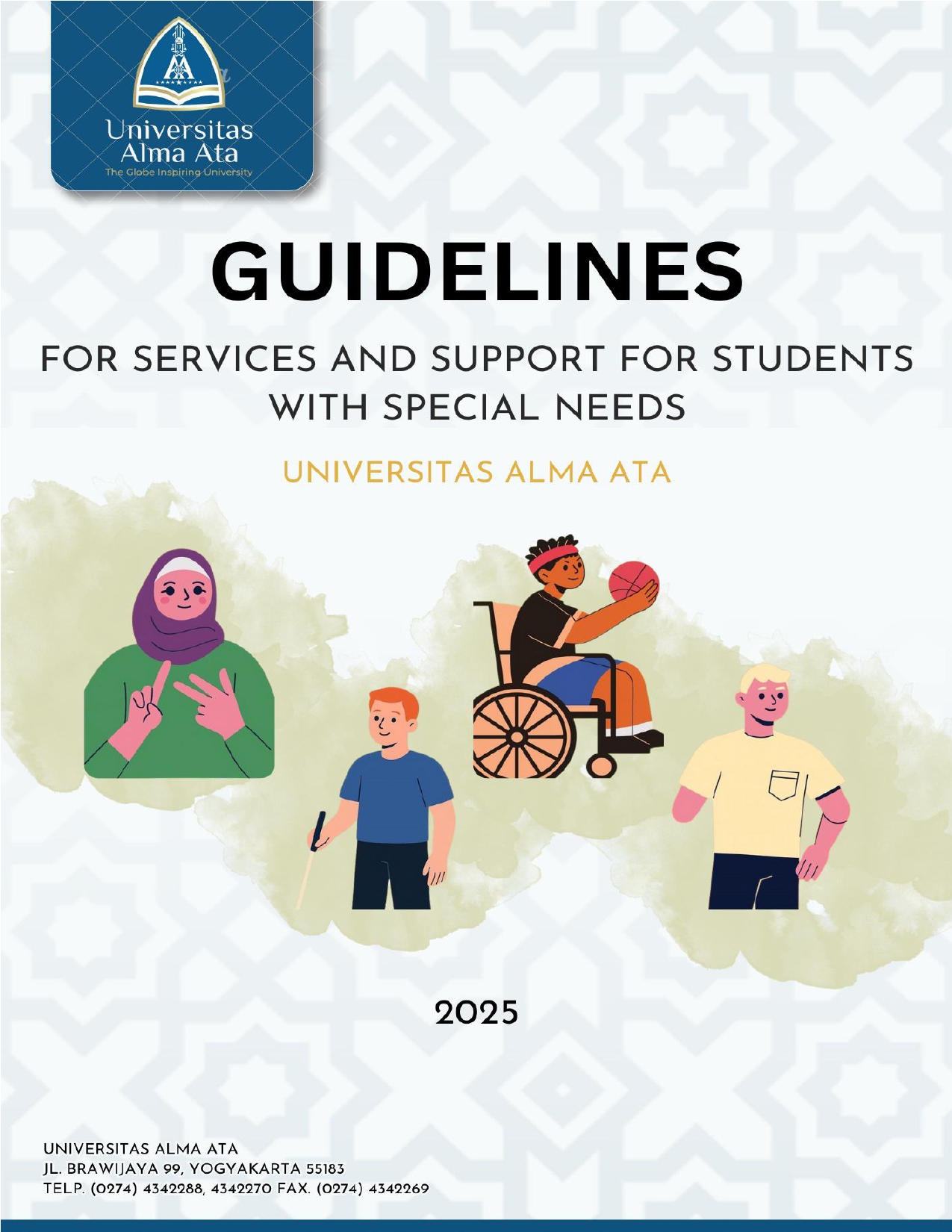
The Guidelines for Services and Support for Students with Special Needs outline Alma Ata University’s commitment to inclusive and non-discriminatory higher education. The document explains the definition and types of students with special needs, the legal basis, and the principles of equal access in academic and non-academic activities, while maintaining the same academic standards for all students.
These guidelines function as an institutional reference for providing structured support, including inclusive admissions, accessible learning processes, fair assessment, adequate facilities, trained lecturers and staff, and sustainable funding. The document ensures that students with special needs can participate fully in university life through appropriate accommodations, support systems, and an inclusive academic environment.